

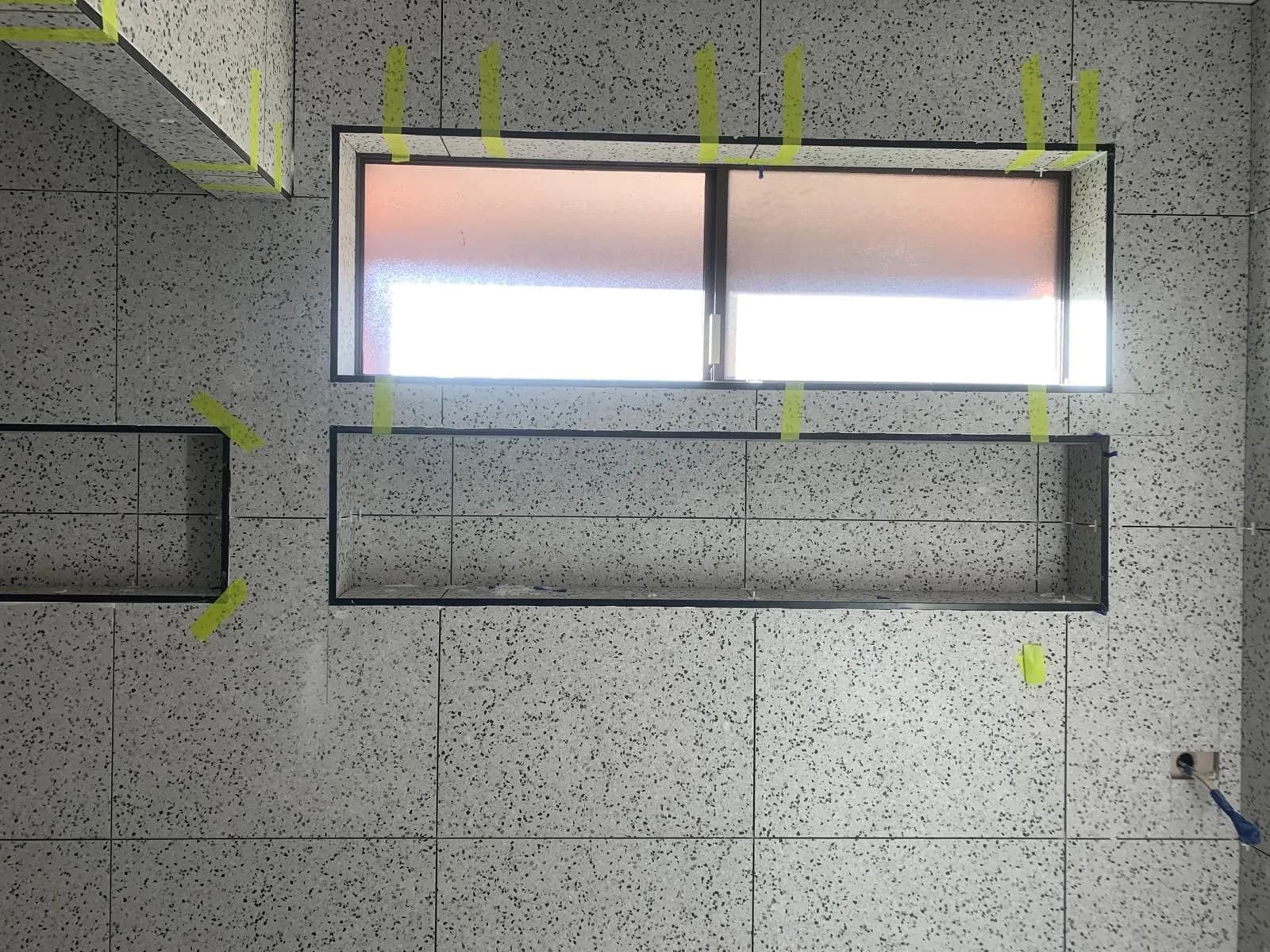
This installation guide covers key procedures for installing tiles on the kitchen wall, including planning and final adaptation.
Plan Your Kitchen Wall Tiling Project
A tile job on a kitchen wall would require careful planning. Plan ahead about how you are going to lay out and what materials you are going to require.
You will have to measure the wall to determine how much I need. Choose the type of tiles suitable for your kitchen. Others use plain ceramic tiles for their simple appearance, while others use porcelain or glass tiles for a contemporary appearance.
Arrange the manner in which the tiles are going to be used. Grid patterns are neat; staggered or brick patterns add character.
Do not forget about such items as power outlets, cabinets, and range hoods. Premeditating them early will reduce them later.
Select Building Materials: Kitchen Walls
The type of tile influences its lifespan and appearance. Common options are:
Ceramic tiles
the ones that are sure and easy to wash and are available in a variety of colors and finishes.
Mosaic tiles
are solid and waterproof, excellent in the active kitchen.
Glass tiles
are tile types used on the backsplash; they are reflective and appear sleek and contemporary.
Tile size matters too. The small tiles are friendly around corners and outlets; the large tiles present a slick, modern appearance.
The selection of the appropriate tile ensures your kitchen wall does not lose its shape or functionality.
Prepare Your Kitchen Wall
You must have a firm level surface to start with. The failure to watch it will result in loosening or cracking of the tiles in the future.
Erase the deteriorated wallpaper; paint colored areas or cracks that prevent adhesive from adhering. Once the surface is clean, then clean the wall to get rid of grease, dust, and kitchen residues.
In the event that the wall is not even, use a leveling compound to the wall. Next, make some horizontal marks with a level. These strips tend to straighten tiles, allowing installation.
This additional prep time can be justified, as it improves the final outcome.
Gather Tools and Materials
The last thing before commencing tiling is to prepare all the tools and materials. This avoids interruptions.
This organization helps keep the installation stable and effective.
Install Your Kitchen Wall Tiles
When you are ready, begin tiling.
Apply adhesive on a small piece of the wall using a notched trowel. Position the initial tile. The tile is usually positioned at the bottom or in a reference line.
Use spacers to keep even gaps. Continue row by row with reference to a level.
Cut tiles will fit around dispensers, cabinets, or sides. A tile cutter or wet saw helps.
Applying adhesive slowly and in small amounts helps prevent it from drying out too quickly and keeps it precise.
Grouting and Finishing
Once the tiles are laid, the final process begins-normally, it takes approximately 24 hours.
Remove the spacers and apply grout with a float, pressing it into the gap. Before the remaining grout dries, remove it with a moist sponge.
Once grout has dried as the manufacturer recommends, a sealant can be applied to the grout to stop water and stains from moisture and to prevent bonding in kitchens.
At the end, the tiles must be wiped clean; this gives the wall a smooth look.
Tiling Tips for Kitchens
To handle extensive work projects or intricate layouts, many residents in Cranbourne, Berwick, Narre Warren, Dandenong, and other areas of Melbourne contract the services of professionals such as Peninsula Tiling. They possess the equipment and expertise to deliver accurate and long-term outcomes.

 WhatsApp